

Liposuction in Turkey: Procedure, Recovery and What You Should Know
Liposuction, also known as lipoplasty or lipoaspiration, is a plastic surgery procedure in which stubborn fat beneath the skin is removed by suction through thin tubes called cannulas. It targets areas where fat remains despite diet and exercise. This guide explains who liposuction may suit, the areas and techniques involved, preparation and recovery, possible risks, and what international patients should consider when planning liposuction in Turkey.
Liposuction at a glance
- Aim: To reduce localised fat deposits that resist diet and exercise and to contour the body
- Anaesthesia: General anaesthesia, sedation or local anaesthesia, depending on the size of the area
- Duration of surgery: Around 1–4 hours
- Hospital stay: Often same-day discharge for small areas; 1 night for larger areas
- Return to desk work: Usually 5–10 days
- Recommended stay in Turkey: Usually 5–7 days
- Final result: Settles within 3–6 months
These are average figures; they vary from person to person, by treated area and according to your surgeon's assessment.
What Is Liposuction?
How fat is distributed in the body is largely determined by genetics and hormones. As a result, some people have fat deposits on the abdomen, waist, hips or thighs that do not shrink with diet and exercise, even at a healthy weight.
During liposuction, the surgeon usually makes a few small incisions of a few millimetres, inserts thin cannulas beneath the skin and removes excess fat by suction. The aim is not weight loss but improving the contour of disproportionate areas. Liposuction does not remove loose skin, is not a treatment for cellulite and does not repair abdominal muscle separation. In these cases, other procedures such as skin-tightening surgery may be needed.
Which Areas Can Be Treated With Liposuction?
- Abdomen: Above and below the navel
- Waist and flanks: Fat deposits on both sides of the waist
- Back: Especially the bra line and lower back
- Arms: The back of the upper arm
- Thighs: Inner and outer thighs
- Hips and buttock area
- Inner knees
- Chin and neck
- Male chest: In gynaecomastia, liposuction alone may be enough if fatty tissue predominates; if there is excess glandular tissue, it may also need to be removed.
Your surgeon decides which areas can be treated in the same session, taking the total amount of fat to be removed and safety into account.
Who May Be a Candidate for Liposuction?
Suitability can only be determined by a specialist examination. In general, people with the following characteristics may be considered:
- Close to their ideal weight and having kept it stable for at least 6 months
- Localised fat deposits that persist despite diet and exercise
- Good skin elasticity (important for the skin to adapt after fat removal)
- In good general health, without uncontrolled chronic conditions
- Willing to stop smoking and nicotine products
- Realistic expectations
Situations where surgery may need to be postponed or reassessed
- Significant excess weight or obesity (weight-loss options are considered first)
- Marked skin laxity (a skin-tightening procedure may be more suitable)
- Pregnancy, breastfeeding or a planned pregnancy in the near future
- Uncontrolled diabetes, serious heart or lung disease, or blood clotting disorders
Liposuction is not a weight-loss method. If you wish to lose weight, nutrition, exercise or, where appropriate, medical treatment options should first be discussed with your healthcare providers.
Liposuction Techniques
Most techniques used today involve first infiltrating the fatty tissue with a special fluid (tumescent solution) and then removing the fat with cannulas. Techniques differ in the type of energy used to loosen the fat before it is removed.
| Technique | How it works | Note |
|---|---|---|
| Tumescent liposuction | A fluid containing saline, local anaesthetic and a vessel-constricting agent is infiltrated, then fat is removed with cannulas | The standard method and the basis of the other techniques |
| Vaser (ultrasound-assisted) liposuction | Ultrasound energy loosens fat cells, which are then removed by suction | May be preferred for denser (fibrous) fat and fine contouring |
| Laser-assisted liposuction | Laser energy liquefies fat before removal | Usually used for small, limited areas |
| Power-assisted liposuction (PAL) | Fat is removed with a vibrating cannula | Can be helpful for larger areas and revision procedures |
| High-definition (HD) liposuction | Detailed contouring to accentuate muscle definition | May be considered for people with low body fat and good skin quality |
Each technique has its own uses and risks; no single technique is superior for every patient. Your surgeon will decide on the most suitable method after examination.
Liposuction can be combined with procedures such as a tummy tuck, breast surgery or fat transfer to another area. After childbirth, such combinations are often called a mommy makeover. Whether several procedures can be performed together is decided by the surgeon, taking operating time and safety into account.
Preparing for Surgery
- Specialist consultation: Your fat distribution, skin elasticity and general health are assessed, and the areas to be treated and the technique are discussed.
- Tests: Blood tests and, if needed, an ECG and anaesthesia assessment.
- Medication: Tell your doctor about blood thinners, certain painkillers, herbal supplements and hormone-containing medicines; some may need to be stopped before surgery.
- Smoking and nicotine: Most surgeons ask you to stop at least 3–4 weeks before surgery.
- Compression garment: The garment you will wear after surgery should suit the treated area and your measurements.
- Informed consent: The expected benefits, risks and alternatives must be explained to you clearly, and your consent obtained in writing.
How Is Liposuction Performed?
- Marking: Before surgery, the areas to be treated are marked on the skin while you are standing.
- Anaesthesia: General anaesthesia, sedation or local anaesthesia is chosen depending on the size of the area.
- Incisions: Small incisions of a few millimetres are made, usually in natural creases or areas covered by underwear.
- Tumescent solution: A special fluid is infiltrated to reduce bleeding and pain.
- Fat removal: Thin cannulas are moved in a controlled way beneath the skin and the fat is removed by suction. Assisting technologies such as Vaser may be used where appropriate.
- Closure and compression: The incisions are stitched or may be left open to allow fluid drainage. A compression garment is put on at the end of surgery.
For patient safety, the amount of fat that can be removed in one session is limited. Your surgeon determines this amount based on your weight, general health and the areas treated.
Liposuction Recovery
First days (days 1–3)
Swelling, bruising and tenderness similar to muscle soreness are expected in the treated areas; pain is managed with medication. Light-coloured fluid leaking from the incisions during the first 24–48 hours is normal. Short walks soon after surgery are encouraged to reduce the risk of blood clots.
First week
The compression garment is worn day and night. Dressings are checked and follow-up visits take place. People with desk jobs can often return to work within 5–10 days. Lymphatic drainage massage may be used if your surgeon recommends it.
Weeks 2–6
Most bruising fades. Light exercise can usually be resumed in weeks 2–3 and strenuous sports after 4–6 weeks, with your surgeon's approval. The compression garment is usually worn for 4–6 weeks.
Months 2–6
Swelling gradually decreases and the new contours become more visible. The final result usually settles within 3–6 months and may take longer for larger areas. The small incision scars fade over time.
When to seek medical help immediately: If you develop a fever, increasing pain or swelling, redness or foul-smelling discharge from the incisions, swelling or pain in one leg, shortness of breath, chest pain or confusion, contact your surgeon or the nearest emergency department without delay.
Possible Risks and Complications
Like any surgery, liposuction carries risks. Having it performed by an experienced specialist in an appropriate setting, staying within safe fat-removal limits and following post-operative instructions helps reduce these risks, but cannot eliminate them. The main risks include:
- Bruising, swelling and numbness: Common, and usually resolve over weeks or months.
- Contour irregularities and asymmetry: Rippling, dents or differences between the two sides may occur; a revision procedure is sometimes needed.
- Seroma: Fluid collection under the skin, which can be drained with a needle if necessary.
- Infection and wound-healing problems: Uncommon; the risk is higher in smokers.
- Skin discolouration or burns: Rare, mainly with heat-based techniques (Vaser, laser).
- Deep vein thrombosis and pulmonary embolism: Rare but serious; prevented with early mobilisation, compression and, where needed, medication.
- Fat embolism: Fat particles entering the bloodstream; very rare but serious.
- Fluid balance disorders: Large-volume procedures can affect the body's fluid and electrolyte balance, which is why they require monitoring in hospital.
- Internal organ injury: A very rare but serious complication, particularly in the abdominal area.
- Anaesthesia-related risks: These are discussed separately during the pre-operative anaesthesia assessment.
Liposuction in Turkey: The Process for International Patients
For patients planning to travel to Turkey for treatment, the process usually follows these steps:
- Online consultation: Your photos and medical history are reviewed by a specialist surgeon. An online assessment does not replace an in-person examination; the final decision is made after examination.
- Travel planning: Flights, airport transfer, accommodation and interpreter support, if needed, are arranged.
- In-person examination and tests: Before surgery, a physical examination, blood tests and anaesthesia assessment are carried out; the consent process is conducted in your language or with an interpreter.
- Surgery: Depending on the treated areas, same-day discharge or a 1-night hospital stay is planned.
- Follow-up visits: Dressing changes and check-ups after discharge.
- Return home and remote follow-up: Your travel date is confirmed by your surgeon; follow-up continues through online check-ins.
Travel planning tips
- Plan a stay of around 5–7 days to cover pre- and post-operative visits; this may be longer if several areas or additional procedures are planned.
- Follow your surgeon's advice on reducing the risk of blood clots during long flights: drink plenty of water, move regularly and wear your compression garment and, if advised, compression stockings.
- Inform your doctor at home in case you need care after returning, and keep your discharge summary with you.
- Look into travel health insurance options that cover complications.
- Check that the healthcare facility holds an International Health Tourism Authorization Certificate issued by the Turkish Ministry of Health, and confirm the specialty of the surgeon who will perform your operation.
Frequently Asked Questions
Will I lose weight with liposuction?
Liposuction is not a weight-loss method. The amount of fat removed usually makes only a small difference on the scales. The aim is to contour the body by reducing localised fat deposits that resist diet and exercise.
Does the fat come back after liposuction?
The fat cells that are removed do not come back. However, the remaining fat cells can grow if you gain weight, and significant weight gain may also lead to fat accumulating in other areas. Keeping your weight stable is important to maintain results.
How much fat can be removed in one session?
For patient safety, the amount that can be removed in one session is limited and is determined by your surgeon based on your weight, health and the areas treated. Risks increase with the volume removed, which is why large-volume procedures require monitoring in hospital.
What is the difference between liposuction and a tummy tuck?
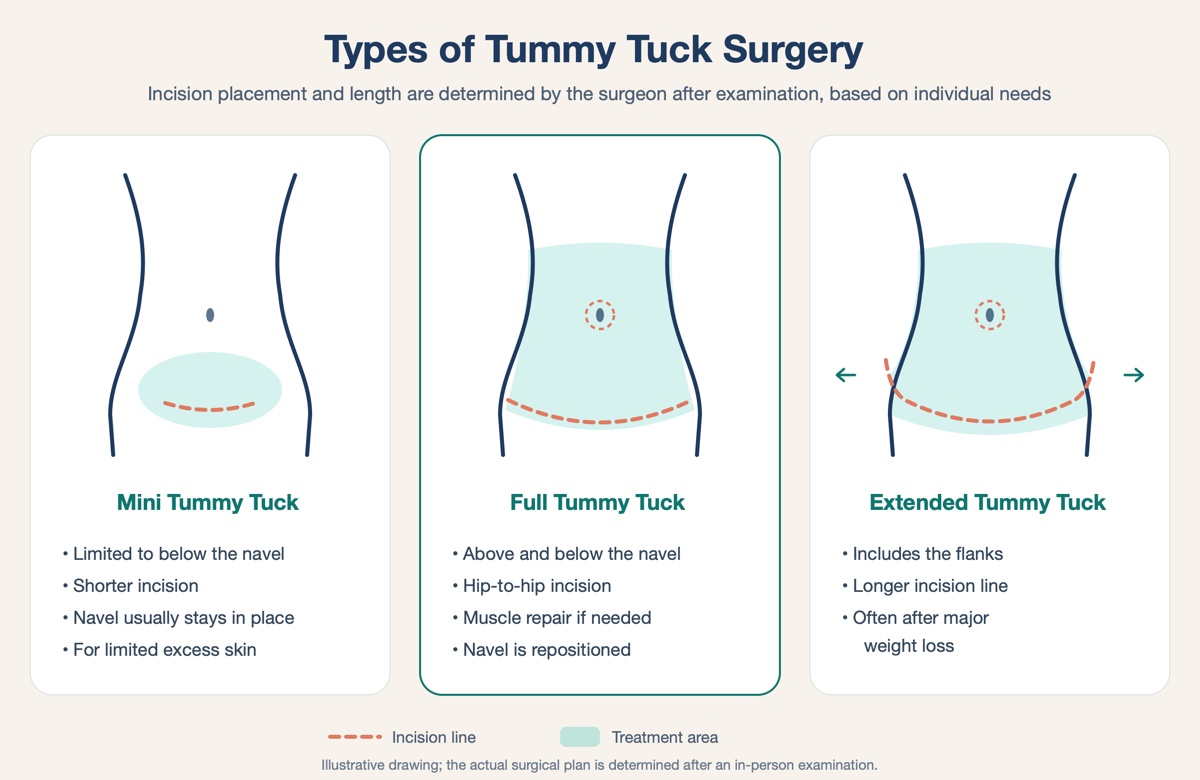
Liposuction only removes fat beneath the skin; it does not remove loose skin or repair separated muscles. A tummy tuck removes excess skin and fat and, if needed, repairs the abdominal muscles. The two can be combined in some patients; a specialist surgeon decides which is suitable after examination.
Is Vaser liposuction better than traditional liposuction?
No single technique is better for every patient. The type of fat, the area to be treated and your expectations determine the choice of technique. Your surgeon will decide on the most suitable method after examination.
Will liposuction leave scars?
The incisions are usually only a few millimetres long and are placed in natural creases or areas covered by underwear whenever possible. The scars may be visible in the first months and fade over time. Their final appearance depends on your skin type.
Is liposuction painful?
Because the procedure is performed under anaesthesia, you will not feel pain during surgery. In the days afterwards, you may feel tenderness similar to muscle soreness after intense exercise; this is managed with painkillers and eases within days.
How long do I need to wear a compression garment?
The compression garment is usually worn for 4–6 weeks: day and night in the first weeks, and then for shorter periods as advised by your surgeon. It helps reduce swelling and allows the skin to adapt to the new contours.
How long do I need to stay in Turkey for liposuction?
Allowing for the pre-operative examination and tests, surgery and first check-ups, a stay of around 5–7 days is usually planned. This may be longer if several areas or additional procedures are planned. Your return date should be confirmed by your surgeon based on your recovery.
When can I fly after liposuction?
Long journeys after surgery can increase the risk of blood clots in the leg veins (deep vein thrombosis). The right time to fly varies from person to person and must be confirmed by your surgeon. During travel, drink plenty of water, move regularly and wear your compression garment and, if advised, compression stockings.
Does liposuction remove cellulite or loose skin?
No. Liposuction is not a cellulite treatment and does not correct significant skin laxity. In people with poor skin elasticity, loose skin may even become more noticeable after fat removal. In such cases, other options such as skin-tightening procedures may be considered.
Can men have liposuction?
Yes. In men, the abdomen, flanks and chest are the most commonly treated areas. In chest enlargement (gynaecomastia), liposuction alone may be enough if fatty tissue predominates; if there is excess glandular tissue, it may also need to be removed.
Specialist Assessment
To find out whether liposuction is suitable for you, and which areas and technique may be considered, you need a consultation with a specialist in plastic, reconstructive and aesthetic surgery. For a preliminary assessment, you can reach us via our contact page.
Related pages: Tummy tuck · Mommy makeover · Your treatment journey
Important information: The information on this page is for general information only and does not replace medical diagnosis, treatment or a consultation with a doctor. Every person's health is different; treatment options, risks and outcomes vary from person to person. No specific result is promised.
BEFİT İZMİR Seyahat Acenteliği Turizm ve Sağlık Hizmetleri Danışmanlık Ticaret Limited Şirketi
Health Tourism Authorization Certificate No: AK-1713